Stamp condition value estimator
There is no fixed percentage for any stamp fault, and our guides do not give one: the discount depends on the size and position of the fault and on how scarce the stamp is. On a common stamp a serious fault such as a tear or a thin can remove almost all of the value; on a genuinely scarce stamp the price falls, but the scarcity does not disappear. Tick what you see to get the typical effect, fault by fault.
Catalogues price a stamp in sound condition. A fault is never in the printed number, so every fault is a discount from it — and the worst fault on the stamp sets the tone of the price.
Condition value estimator
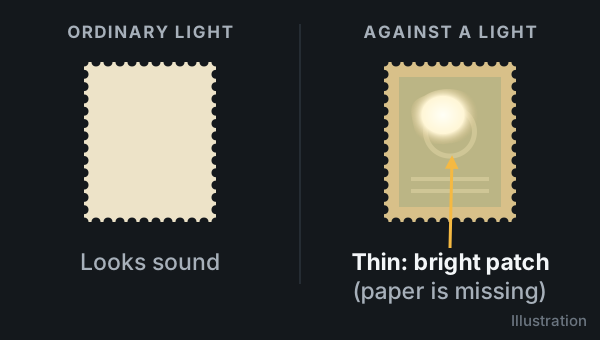
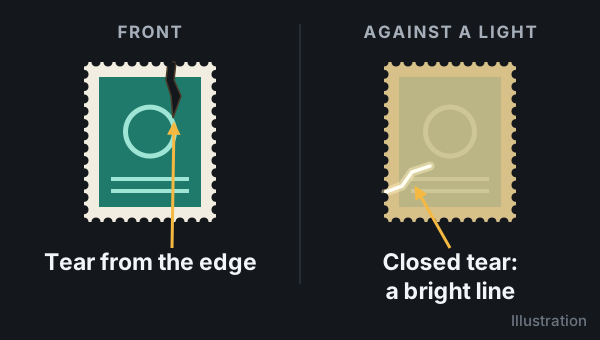
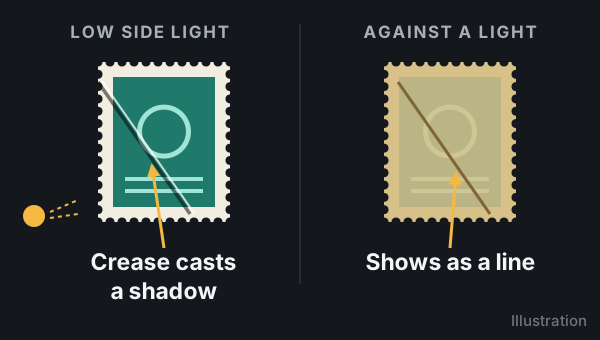
Check the back against a light and the front under raking light first. Nothing you tick leaves this page.
Each fault and its typical effect
| Fault | Severity | Typical effect on price |
|---|---|---|
| Thin (bright patch against a light) | Serious | Common stamp: a small fraction of its sound price. Rare stamp: can still carry meaningful value. |
| Tear into the design | Severe | Almost always a small fraction of a sound copy. |
| Small tear or nick in the margin only | Moderate | Judged more leniently than a tear into the design. |
| Crease | Moderate | Moderate to serious depending on depth. |
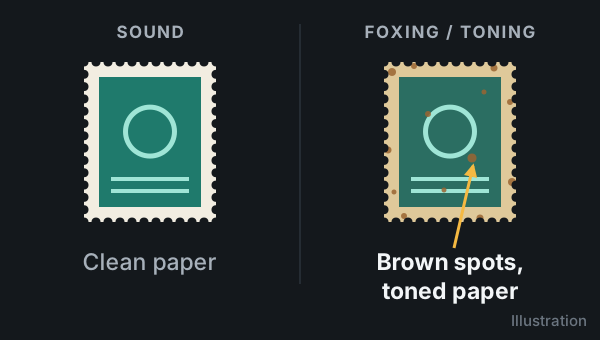
| Toning or foxing (brown spots, staining) | Variable | Light toning is sometimes tolerated; foxing makes the stamp faulty. |
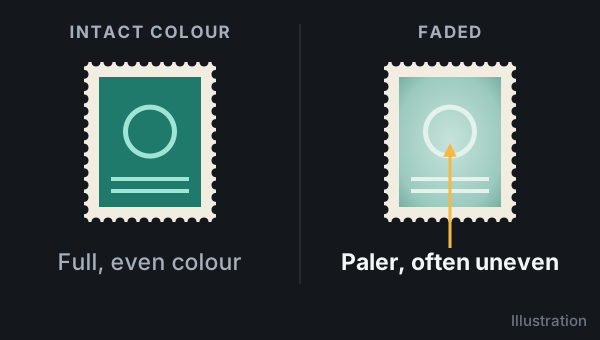
| Faded colour | Moderate | Below the same stamp with intact colour; heavy fading is discounted like damage. |
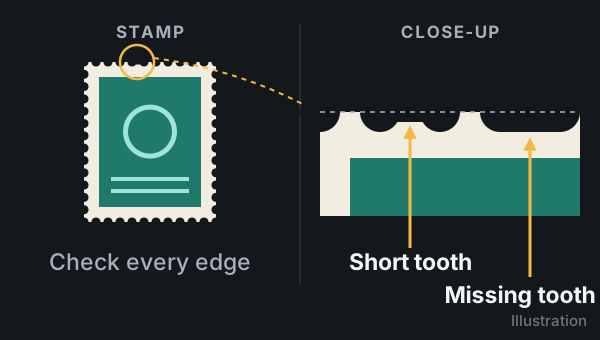
| Short or missing perforation teeth | Moderate | A listed fault: the stamp is no longer a sound copy. |
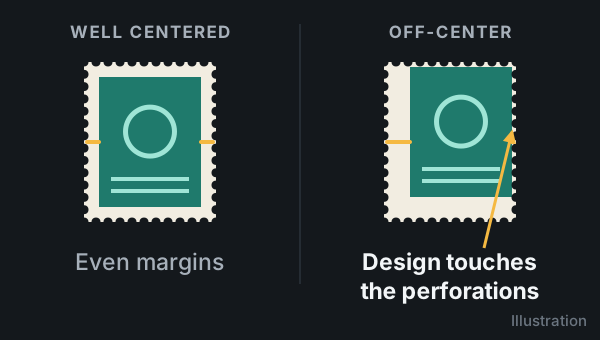
| Off-center, design still clear of the perforations | Variable | Grades below Superb; on classic material, Fine to Extremely Fine can multiply the price several times. |
| Badly off-center (design touches or is cut by the perforations) | Serious | Can be worth a small fraction of a well-centered copy. |
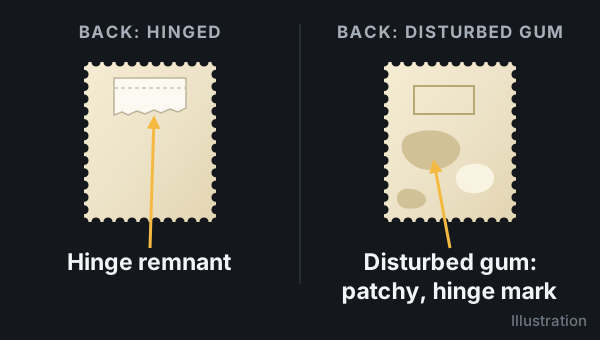
| Mint, but hinged | Moderate | A fraction of a never-hinged copy. |
| Disturbed, bloomed or regummed gum | Serious | A fraction of the quoted mint figure, sometimes less than a good used copy. |
Each line summarises the linked StampWorth guide. None of the guides gives a fixed percentage, so neither does this tool.
How the estimator works
- Each fault is rated from the wording of its guide: variable (sometimes tolerated), moderate, serious or severe.
- The most serious fault you tick sets the overall result, because a buyer prices the stamp from its worst fault.
- The scarcity choice changes the wording: a fault on a common stamp can remove almost all of the value, while a genuinely scarce stamp keeps some value even when damaged.
- Ticking more than one fault adds a note that they add up; the tool does not multiply invented percentages together.
Before you do anything to a damaged stamp, read its guide: a filled thin is still a repair, and added colour counts as an alteration. To see how the faults add up to a grade, read stamp condition and grading, or go back to all condition faults.
Common questions
How much does a thin reduce a stamp’s value?
There is no fixed percentage. A common stamp with a thin can drop to a small fraction of its sound price, and may sell only in a bulk lot; a genuinely rare stamp with a thin can still carry meaningful value because so few copies exist.
Which stamp fault reduces value the most?
A tear into the design and a thin are the most serious: both are permanent damage to the paper. A badly off-center copy and disturbed or regummed gum on a mint stamp can also bring the price down to a fraction of a sound copy.
Does a hinge reduce the value of a mint stamp?
Yes. A hinged mint stamp is worth a fraction of a never-hinged copy of the same stamp, and one with disturbed or regummed gum can be worth less than a good used copy.
Why does the estimator not show a percentage of catalogue?
Because there is no reliable fixed figure. The discount depends on the size and position of the fault and on how scarce the stamp is, and our guides do not state a percentage, so the tool gives the typical effect in words instead of inventing a number.
Check a stamp’s condition in seconds
StampWorth identifies the stamp from a photo, grades its condition, suggests its catalogue numbers and gives an AI estimate of its market-value range — a starting point, not a sale price. Free to download on iPhone and Android: 3 identifications a day, and your first valuation shows its full value; Pro shows every value.